Leadership & Timeline

OneNano is governed by The Society of Nanoscale Infrastructure Professionals, Inc., a Pennsylvania-based non-profit organization and U.S. 501(c)(3) public charity operating under the name OneNano.

About OneNano

OneNano’s story begins a decade ago when a group of nanofabrication and cleanroom facility colleagues in the mid-Atlantic chose to assemble every six months to discuss shared challenges. This meeting was known as the Mid-Atlantic Nanofab Managers’ Meeting, originally founded by the late Mr. Meredith Metzler. Building on this network of regional peers, the organization incorporated, expanding its scope to support a broader, national community of nanoscale infrastructure professionals who manage nanofabrication cleanrooms and nanoscale characterization facilities. In his honor, regional chapters organize Meredith Meetings to regularly connect regional peers who manage nanoscale infrastructure.

The organization is led by a Board of Directors and Officers composed of experienced nanoscale infrastructure professionals, representing expertise in nanofabrication and characterization facility operations, administration, finance, and facilities support across academia, government, and industry. The Board is responsible for setting strategic direction, ensuring sound governance and financial stewardship, while advancing the organization’s mission in service of the nanoscale infrastructure community. Through its officers, directors, and volunteer leadership, OneNano operates as a member-driven professional society, fostering collaboration, engagement, and shared advancement across regional chapters and the wider nanoscale infrastructure ecosystem spanning the US and beyond.

OneNano Officers
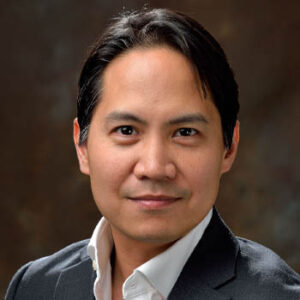
Gerald Lopez
OneNano President
Dr. Gerald G. Lopez is the Center Associate Director and Director of Operations & Business Development at the University of Pennsylvania’s Singh Center for Nanotechnology, where he leads strategy, partnerships, and day-to-day operations that expand access to Penn’s shared nanotechnology infrastructure. Dr. Lopez earned his Ph.D. and M.S. in Electrical & Computer Engineering from the Georgia Institute of Technology and a B.S. in Computer Engineering (cum laude) from UMBC, where he was a Meyerhoff Scholar and Janice A. Lumpkin Scholar. His career spans semiconductor and software roles—ranging from lithography process development and tooling in academia to technical sales and support in computational lithography and prior work in software engineering—experience he now leverages to connect researchers with the right capabilities and expertise across Penn and beyond. A community builder in advanced lithography, Dr. Lopez is the founder and Board Chair of MAEBL (Meeting for Advanced Electron Beam Lithography) and has served in the leadership of the EIPBN Conference, including as 2021 Conference Chair and current Operations Trustee. Profiled for his role in growing the Singh Center’s impact and external engagement, his outreach and advisory work also includes cross-sector panels and regional innovation initiatives that leverage open-access nanoscale infrastructure to accelerate R&D and workforce development.
Eric Johnston
OneNano Vice President
Eric Johnston is Director of the Quattrone Nanofabrication Facility (QNF) at the University of Pennsylvania’s Singh Center for Nanotechnology, where he oversees cleanroom operations, training, and process availability for Penn and external users. Eric has been at Penn since 1996, first as a research specialist in Bioengineering, and later joined the QNF staff in 2012. He subsequently served as program manager and soft lithography manager before his appointment as QNF Director. His focus has been on removing barriers for users through hands-on workshops, video training, and thorough documentation. He holds graduate degrees (M.S., M.E.) and is recognized within the NSF NNCI network for his expertise in soft lithography and laser micromachining. As Director, Johnston has emphasized consistent, scalable training. He co-led the production of standardized QNF training videos to complement in-person instruction—an effort aimed at improving user outcomes and safety. He also organizes and teaches public workshops in microfluidics. Beyond day-to-day facility leadership, Johnston is an active regional convener. He has helped coordinate Mid-Atlantic nanofab manager meet-ups that connect university cleanrooms and share best practices on workforce development and operations. As a contact for QNF matters, Johnston works closely with researchers on process access, onboarding, and special requests (e.g., new chemical approvals), reflecting his user-centric approach to facility management.
Chad M. Eichfeld
OneNano Secretary
Dr. Chad M. Eichfeld is an Associate Research Professor in Penn State’s Materials Research Institute and the Director of Operations for the university’s Nanofabrication Laboratory (Nanofab), an open-access cleanroom supporting campus and external users. He earned three degrees in Materials Science and Engineering from Penn State: a B.S. (2002), an M.S. (2004), and a Ph.D. (2009). His doctoral dissertation, “Nanofabrication of Structures for the Study of Nanowire Doping,” focused on controlled doping in silicon nanowires. At the Nanofab, Dr. Eichfeld oversees day-to-day operations, user programs, and tool strategy. Under his leadership, the facility achieved ISO 9001 certification and expanded capabilities with new tools and instrumentation. Chad’s technical work spans micro- and nanofabrication, with co-authored publications on silicon nanowire devices and process methods, as well as collaborations that advance ultraviolet and x-ray reflection gratings for astronomy and processes involving electron-beam lithography.

OneNano Board of Directors

Gerald Lopez
Dr. Gerald G. Lopez is the Center Associate Director and Director of Operations & Business Development at the University of Pennsylvania’s Singh Center for Nanotechnology, where he leads strategy, partnerships, and day-to-day operations that expand access to Penn’s shared nanotechnology infrastructure. Dr. Lopez earned his Ph.D. and M.S. in Electrical & Computer Engineering from the Georgia Institute of Technology and a B.S. in Computer Engineering (cum laude) from UMBC, where he was a Meyerhoff Scholar and Janice A. Lumpkin Scholar. His career spans semiconductor and software roles—ranging from lithography process development and tooling in academia to technical sales and support in computational lithography and prior work in software engineering—experience he now leverages to connect researchers with the right capabilities and expertise across Penn and beyond. A community builder in advanced lithography, Dr. Lopez is the founder and Board Chair of MAEBL (Meeting for Advanced Electron Beam Lithography) and has served in the leadership of the EIPBN Conference, including as 2021 Conference Chair and current Operations Trustee. Profiled for his role in growing the Singh Center’s impact and external engagement, his outreach and advisory work also includes cross-sector panels and regional innovation initiatives that leverage open-access nanoscale infrastructure to accelerate R&D and workforce development.
Eric Johnston
Eric Johnston is Director of the Quattrone Nanofabrication Facility (QNF) at the University of Pennsylvania’s Singh Center for Nanotechnology, where he oversees cleanroom operations, training, and process availability for Penn and external users. Eric has been at Penn since 1996, first as a research specialist in Bioengineering, and later joined the QNF staff in 2012. He subsequently served as program manager and soft lithography manager before his appointment as QNF Director. His focus has been on removing barriers for users through hands-on workshops, video training, and thorough documentation. He holds graduate degrees (M.S., M.E.) and is recognized within the NSF NNCI network for his expertise in soft lithography and laser micromachining. As Director, Johnston has emphasized consistent, scalable training. He co-led the production of standardized QNF training videos to complement in-person instruction—an effort aimed at improving user outcomes and safety. He also organizes and teaches public workshops in microfluidics. Beyond day-to-day facility leadership, Johnston is an active regional convener. He has helped coordinate Mid-Atlantic nanofab manager meet-ups that connect university cleanrooms and share best practices on workforce development and operations. As a contact for QNF matters, Johnston works closely with researchers on process access, onboarding, and special requests (e.g., new chemical approvals), reflecting his user-centric approach to facility management.
Chad M. Eichfeld
Dr. Chad M. Eichfeld is an Associate Research Professor in Penn State’s Materials Research Institute and the Director of Operations for the university’s Nanofabrication Laboratory (Nanofab), an open-access cleanroom supporting campus and external users. He earned three degrees in Materials Science and Engineering from Penn State: a B.S. (2002), an M.S. (2004), and a Ph.D. (2009). His doctoral dissertation, “Nanofabrication of Structures for the Study of Nanowire Doping,” focused on controlled doping in silicon nanowires. At the Nanofab, Dr. Eichfeld oversees day-to-day operations, user programs, and tool strategy. Under his leadership, the facility achieved ISO 9001 certification and expanded capabilities with new tools and instrumentation. Chad’s technical work spans micro- and nanofabrication, with co-authored publications on silicon nanowire devices and process methods, as well as collaborations that advance ultraviolet and x-ray reflection gratings for astronomy and processes involving electron-beam lithography.
Daniel Woodie is currently the Director of the Micro/Nanofabrication Center (MNFC) at the Princeton Materials Institute (PMI), a clean room user facility that encompasses a suite of tools and processes for assembling devices and structures for electronic, photonic, Micro Electro Mechanical System (MEMS) and biological applications. Woodie joined the PMI in 2024 after spending nearly 24 years at Cornell University, where he was a manager at the Cornell NanoScale Facility and then the safety manager and facilities manager for the College of Engineering and Bowers College of Computing and Information Science. Prior to his work at Cornell, Woodie was a semiconductor process engineer at Lockheed Martin in Manassas, VA from 1995 to 2000. He has a B.S. in chemical engineering from Virginia Tech and an M.S. in chemical engineering from Cornell. Woodie is a founding member of the main OneNano Board as well as the inaugural Chair for the Mid-Atlantic Chapter.
A. Jasper Nijdam
Dr. A. Jasper Nijdam is a Research Associate Professor and the Technical Lab Manager of the Georgetown Nanoscience and Microtechnology Laboratory – GNuLab, housed in Georgetown Department of Physics at Georgetown University. GNuLab is a ~3300 sq ft shared cleanroom facility in Regents Hall on Georgetown’s Hilltop campus. Dr. Nijdam earned a Ph.D. from the University of Twente in the Netherlands on the subject of anisotropic wet-chemical etching of silicon and an M.Sc. in Chemistry from Radboud University Nijmegen growing crystals. Before Georgetown, Dr. Nijdam served as an Assistant Research Professor in Physics at The George Washington University. He was also a postdoctoral fellow at The Ohio State University working on protein microarrays and biomedical devices and before that at Georgetown University working on a transdermal glucose sensor. At Georgetown, he currently oversees day-to-day operations, user training, and administration for GNuLab, supporting micro- and nanofabrication for campus and external researchers. He has also strengthened the regional cleanroom community by organizing the recent Spring 2025 Mid-Atlantic Nanofab Managers Meeting by bringing together academic and government facility leaders and industry partners to share operational best practices. Off-campus, Dr. Nijdam is an annual judge in the Loudoun County Regional and the Virginia State Science and Engineering Fairs.
Matthew T. Moneck, Ph.D.
Dr. Matthew T. Moneck is the Executive Director of the Claire & John Bertucci Nanotechnology Laboratory (“Nanofab”) in Carnegie Mellon University’s Department of Electrical & Computer Engineering, where he leads facility operations, user support, instrumentation strategy, and outreach efforts. He earned a B.S. in Physics from Allegheny College and both his M.S. and Ph.D. in Electrical & Computer Engineering from Carnegie Mellon University. Dr. Moneck has spent more than two decades at CMU in research and technical leadership roles, becoming the Executive Director for the Nanofab in 2015. As part of the College of Engineering’s core research infrastructure, he oversees a 14,000-sq-ft laboratory anchored by the 8,500-sq-ft Class 10/100 Eden Hall Foundation Cleanroom that supports more than 80 processing and characterization tools used across a diverse research portfolio. His professional scope includes providing research expertise and coordinating safety protocols, staff development, and access for internal and external researchers, helping the Nanofab enable high-impact micro-/nanofabrication across the “Tech-Belt” region. Beyond facility leadership, Dr. Moneck has been instrumental in the planning and execution of regional cleanroom manager meetings for the last decade. He also supports curriculum development and semiconductor education as a co-instructor for the Hacker Fab at CMU.
Guy DeRose
Dr. Guy A. DeRose is Director of Technical Operations for Caltech’s Kavli Nanoscience Institute (KNI), where he oversees cleanroom operations, user training, and technical staff to enable micro-/nanofabrication across campus and with external collaborators and customers. He joined Caltech in 1994 after completing a Ph.D. in Physics at Case Western Reserve University (preceded by a B.S. in Physics from Indiana University of Pennsylvania and an M.S. at CWRU). In 2000, he became lab manager in Prof. Axel Scherer’s group at Caltech and helped organize the Large-scale Integration of Nanostructures (LSI-Nano) laboratory, a precursor to the KNI. When the KNI nanofabrication facility opened in 2008, DeRose moved into Institute leadership (Associate Director of Technical Operations), a role in which he continues to manage equipment availability, facilitate user onboarding, and guide process capability growth. A specialist in electron-beam lithography, DeRose has managed KNI’s EBPG systems since their installation and remains directly involved in advanced patterning workflows and training. His technical contributions include co-authored work on next-generation electron-beam resists and ultra-high-aspect-ratio nanolithography, alongside earlier photonic-crystal and semiconductor-laser studies with Caltech collaborators. DeRose is also active in the broader nanofabrication community. He serves in leadership for MAEBL (Meeting for Advanced Electron Beam Lithography), the Southern California chapter of OneNano,  and the International Conference on Electron, Ion and Photon Beam Technology and Nanofabrication (EIPBN). Across three decades at Caltech, DeRose has been a key builder of the KNI’s shared research infrastructure—helping establish centralized nanofabrication at the Institute, expanding the user base that now spans academia and industry, and mentoring staff and students who translate ideas into devices.
Vishva Ray
Dr. Vishva Ray serves on the leadership team of the University of Michigan’s Lurie Nanofabrication Facility (LNF), where he manages user programs and oversees operations for one of the Midwest’s premier open-access cleanrooms. As LNF’s Associate Director, Dr. Ray is dedicated to supporting a diverse community of academic and industrial researchers. He earned his Ph.D. in Materials Science and Engineering from The University of Texas at Arlington in 2008, focusing on CMOS-compatible, room-temperature single-electron devices for his dissertation. Following his doctoral work, Dr. Ray joined the Drndić Lab at the University of Pennsylvania as a postdoctoral researcher, where he developed solid-state platforms for the detection and analysis of DNA, RNA, proteins, and small molecule interactions.

Mid-Atlantic Chapter Executive Committee

Mid-Atlantic Chapter Chair
Daniel Woodie is currently the Director of the Micro/Nanofabrication Center (MNFC) at the Princeton Materials Institute (PMI), a clean room user facility that encompasses a suite of tools and processes for assembling devices and structures for electronic, photonic, Micro Electro Mechanical System (MEMS) and biological applications. Woodie joined the PMI in 2024 after spending nearly 24 years at Cornell University, where he was a manager at the Cornell NanoScale Facility and then the safety manager and facilities manager for the College of Engineering and Bowers College of Computing and Information Science. Prior to his work at Cornell, Woodie was a semiconductor process engineer at Lockheed Martin in Manassas, VA from 1995 to 2000. He has a B.S. in chemical engineering from Virginia Tech and an M.S. in chemical engineering from Cornell. Woodie is a founding member of the main OneNano Board as well as the inaugural Chair for the Mid-Atlantic Chapter.
A. Jasper Nijdam
Mid-Atlantic Chapter Vice-Chair
Dr. A. Jasper Nijdam is a Research Associate Professor and the Technical Lab Manager of the Georgetown Nanoscience and Microtechnology Laboratory – GNuLab, housed in Georgetown Department of Physics at Georgetown University. GNuLab is a ~3300 sq ft shared cleanroom facility in Regents Hall on Georgetown’s Hilltop campus. Dr. Nijdam earned a Ph.D. from the University of Twente in the Netherlands on the subject of anisotropic wet-chemical etching of silicon and an M.Sc. in Chemistry from Radboud University Nijmegen growing crystals. Before Georgetown, Dr. Nijdam served as an Assistant Research Professor in Physics at The George Washington University. He was also a postdoctoral fellow at The Ohio State University working on protein microarrays and biomedical devices and before that at Georgetown University working on a transdermal glucose sensor. At Georgetown, he currently oversees day-to-day operations, user training, and administration for GNuLab, supporting micro- and nanofabrication for campus and external researchers. He has also strengthened the regional cleanroom community by organizing the recent Spring 2025 Mid-Atlantic Nanofab Managers Meeting by bringing together academic and government facility leaders and industry partners to share operational best practices. Off-campus, Dr. Nijdam is an annual judge in the Loudoun County Regional and the Virginia State Science and Engineering Fairs.
Matthew T. Moneck, Ph.D.
Mid-Atlantic Chapter Secretary
Dr. Matthew T. Moneck is the Executive Director of the Claire & John Bertucci Nanotechnology Laboratory (“Nanofab”) in Carnegie Mellon University’s Department of Electrical & Computer Engineering, where he leads facility operations, user support, instrumentation strategy, and outreach efforts. He earned a B.S. in Physics from Allegheny College and both his M.S. and Ph.D. in Electrical & Computer Engineering from Carnegie Mellon University. Dr. Moneck has spent more than two decades at CMU in research and technical leadership roles, becoming the Executive Director for the Nanofab in 2015. As part of the College of Engineering’s core research infrastructure, he oversees a 14,000-sq-ft laboratory anchored by the 8,500-sq-ft Class 10/100 Eden Hall Foundation Cleanroom that supports more than 80 processing and characterization tools used across a diverse research portfolio. His professional scope includes providing research expertise and coordinating safety protocols, staff development, and access for internal and external researchers, helping the Nanofab enable high-impact micro-/nanofabrication across the “Tech-Belt” region. Beyond facility leadership, Dr. Moneck has been instrumental in the planning and execution of regional cleanroom manager meetings for the last decade. He also supports curriculum development and semiconductor education as a co-instructor for the Hacker Fab at CMU.

Midwest Chapter Executive Committee

Nicole Pfiester
Midwest Chapter Vice-Chair
Dr. Nicole A. Pfiester is an Assistant Professor in Physics, Optical Engineering, and NanoEngineering at Rose-Hulman Institute of Technology (RHIT) in Terre Haute, IN. Nicole is an interdisciplinary scientist, with degrees in physics, electrical engineering, and materials science engineering, with published work on thermophotovoltaics, infrared photodetectors, and optical properties of materials. Her present research interests include creating nanostructured materials with properties not seen in nature to improve the performance of cameras and sensors. Nicole is passionate about helping undergraduate students pursue their scientific ideas, often delving into nanotechnology production and applications, and helping all students, regardless of major field of study, see themselves as scientists.
Serkan Butun, Ph.D.
Midwest Chapter Secretary
Dr. Serkan Butun is a Research Associate and equipment manager in Northwestern University’s Micro/Nano Fabrication Facility (NUFAB) within the NUANCE Center, where he supports user training, process development, and day-to-day cleanroom operations. He earned his B.S., M.S., and Ph.D. in Physics from Bilkent University (Ankara, Turkey), focusing on III-nitride photodetectors, plasmonics, and graphene devices.  After completing his doctorate, Dr. Butun joined Northwestern University, first as a postdoctoral researcher in Electrical & Computer Engineering (2012–2016) and then in NUFAB (2016–2019) before being appointed Research Associate in 2019. Dr. Butun’s research spans nanophotonics, plasmonics, and metamaterials. Representative publications include work with Koray Aydin on ultrathin, lithography-free super absorbers and color filters at visible wavelengths, as well as structurally tunable broadband plasmonic absorbers. These studies demonstrated simple thin-film strategies for controlling light absorption and spectral response, influencing device concepts in detectors and displays. He has also co-authored papers on thermally tunable VO₂-based infrared absorbers and on metasurface-enabled contacts for Si color photodetectors. Beyond plasmonics, Dr. Butun contributed to programmable nanoparticle assemblies with the Mirkin group, helping to bridge the gap between top-down patterning and bottom-up DNA-mediated assembly.  Across Northwestern’s shared facilities, he is recognized for his expertise in e-beam/photolithography, dry etching, and thin-film processes, enabling academic and industrial users to translate ideas into micro- and nanoscale devices. Current roles at NUFAB/NUANCE combine his technical leadership with community support—maintaining tool capabilities, mentoring users, and advancing nanofabrication workflows across the SHyNE and NSF NNCI network.
Vishva Ray
Midwest Chapter Chair
Dr. Vishva Ray serves on the leadership team of the University of Michigan’s Lurie Nanofabrication Facility (LNF), where he manages user programs and oversees operations for one of the Midwest’s premier open-access cleanrooms. As LNF’s Associate Director, Dr. Ray is dedicated to supporting a diverse community of academic and industrial researchers. He earned his Ph.D. in Materials Science and Engineering from The University of Texas at Arlington in 2008, focusing on CMOS-compatible, room-temperature single-electron devices for his dissertation. Following his doctoral work, Dr. Ray joined the Drndić Lab at the University of Pennsylvania as a postdoctoral researcher, where he developed solid-state platforms for the detection and analysis of DNA, RNA, proteins, and small molecule interactions.

Southern California Chapter Executive Committee

Guy DeRose
SoCal Chapter President
Dr. Guy A. DeRose is Director of Technical Operations for Caltech’s Kavli Nanoscience Institute (KNI), where he oversees cleanroom operations, user training, and technical staff to enable micro-/nanofabrication across campus and with external collaborators and customers. He joined Caltech in 1994 after completing a Ph.D. in Physics at Case Western Reserve University (preceded by a B.S. in Physics from Indiana University of Pennsylvania and an M.S. at CWRU). In 2000, he became lab manager in Prof. Axel Scherer’s group at Caltech and helped organize the Large-scale Integration of Nanostructures (LSI-Nano) laboratory, a precursor to the KNI. When the KNI nanofabrication facility opened in 2008, DeRose moved into Institute leadership (Associate Director of Technical Operations), a role in which he continues to manage equipment availability, facilitate user onboarding, and guide process capability growth. A specialist in electron-beam lithography, DeRose has managed KNI’s EBPG systems since their installation and remains directly involved in advanced patterning workflows and training. His technical contributions include co-authored work on next-generation electron-beam resists and ultra-high-aspect-ratio nanolithography, alongside earlier photonic-crystal and semiconductor-laser studies with Caltech collaborators. DeRose is also active in the broader nanofabrication community. He serves in leadership for MAEBL (Meeting for Advanced Electron Beam Lithography), the Southern California chapter of OneNano,  and the International Conference on Electron, Ion and Photon Beam Technology and Nanofabrication (EIPBN). Across three decades at Caltech, DeRose has been a key builder of the KNI’s shared research infrastructure—helping establish centralized nanofabrication at the Institute, expanding the user base that now spans academia and industry, and mentoring staff and students who translate ideas into devices.
Brian Thibeault, Ph.D.
SoCal Chapter Vice-Chair
Dr. Brian J. Thibeault is the Technical/Operational Director of the University of California Santa Barbara (UCSB) Nanofabrication Facility, where he leads facility operations and provides technical direction, training, and process support for the large technically diverse user base operating within the facility. He earned his Ph.D. in Electrical & Computer Engineering from UCSB in 1997, researching MBE growth, design, fabrication, and testing of GaAs oxide-apertured VCSELs under Prof. Larry Coldren. After completing his doctorate, Thibeault helped launch WideGap Technology (later Nitres, Inc.) under the leadership of Profs. Umesh Mishra and Steve DenBaars, which Cree acquired in June 2000; he served as a key technical staff member and principal investigator on GaN high-power/white LEDs and RF power HEMTs. He returned to UCSB in December 2000 as lead technical staff for the Nanofabrication Facility and became Technical/Operational Director in May 2018. As Director, Thibeault is the primary contact for lab access and general facility questions and oversees a user program that annually serves over 500 campus and external researchers. His professional record includes co-authorship on 150+ publications and co-inventorship on 14 patents spanning optoelectronics and micro/nanofabrication. Recent activities have highlighted UCSB Nanofab’s role in regional innovation and data-driven process control. In 2025, he co-presented on semiconductor analytics and the facility’s collaboration with PDF Solutions to enhance process reproducibility within a multi-material, multi-user facility. Across UCSB’s research ecosystem, numerous theses and papers acknowledge Thibeault’s process expertise and facility leadership—reflecting his long-standing impact on device R&D and user success.
Shiva Bhaskaran, Ph.D.
SoCal Chapter Secretary
Dr. Shivakumar (“Shiva”) Bhaskaran serves as the Associate Director of the John O’Brien Nanofabrication Laboratory at the University of Southern California (USC). In this capacity, he is responsible for overseeing cleanroom operations, user training, and process strategies for researchers on and off campus, including those from external institutions. Dr. Bhaskaran earned his Ph.D. in engineering and completed his graduate studies in electrical engineering at the University of Houston. 

The OneNano Timeline

February 2026

Midwest Chapter is established

Midwest peers organized, forming the inaugural leadership of the OneNano Midwest Chapter.

October 2025

Southern California and Mid-Atlantic Chapters are established

Colleagues from the  Mid-Altantic and Southern California officially established their respective chapters.

July 2025

OneNano is officially founded

After months of planning, the Society of Nanoscale Infrastructure Professionals, Inc., doing business as OneNano, becomes a Pennsylvania non-profit and a US 501(c)(3) public charity. Governance is established forming its Board of Directors with explicit intention to expand leadership to new chapter chairs as regional peers organize bringing on leadership from Southern California and the Midwest. Together, a chapter charter template is established with a resolution passed on the procedure in establishing a chapter and its governance.

August 2024

Strategic Planning Session held

The Mid-Altantic regional peers assembled to begin aligning foundational values of an organization to head spear a larger need for local/regional engagement.

April 20, 2016

First Mid-Atlantic Nanofab Managers Meeting

Founded by Mr. Meredith Metzler, regional peers in academia and government who manage cleanrooms that support research and innovation begin meeting regularly every six months. This established cadence set a national example that was replicated within the National Science Foundation (NSF) National Nanotechnology Coordinated Infrastructure (NNCI).

Scroll to Top